[ESP]
Fósiles Mutantes (2025)
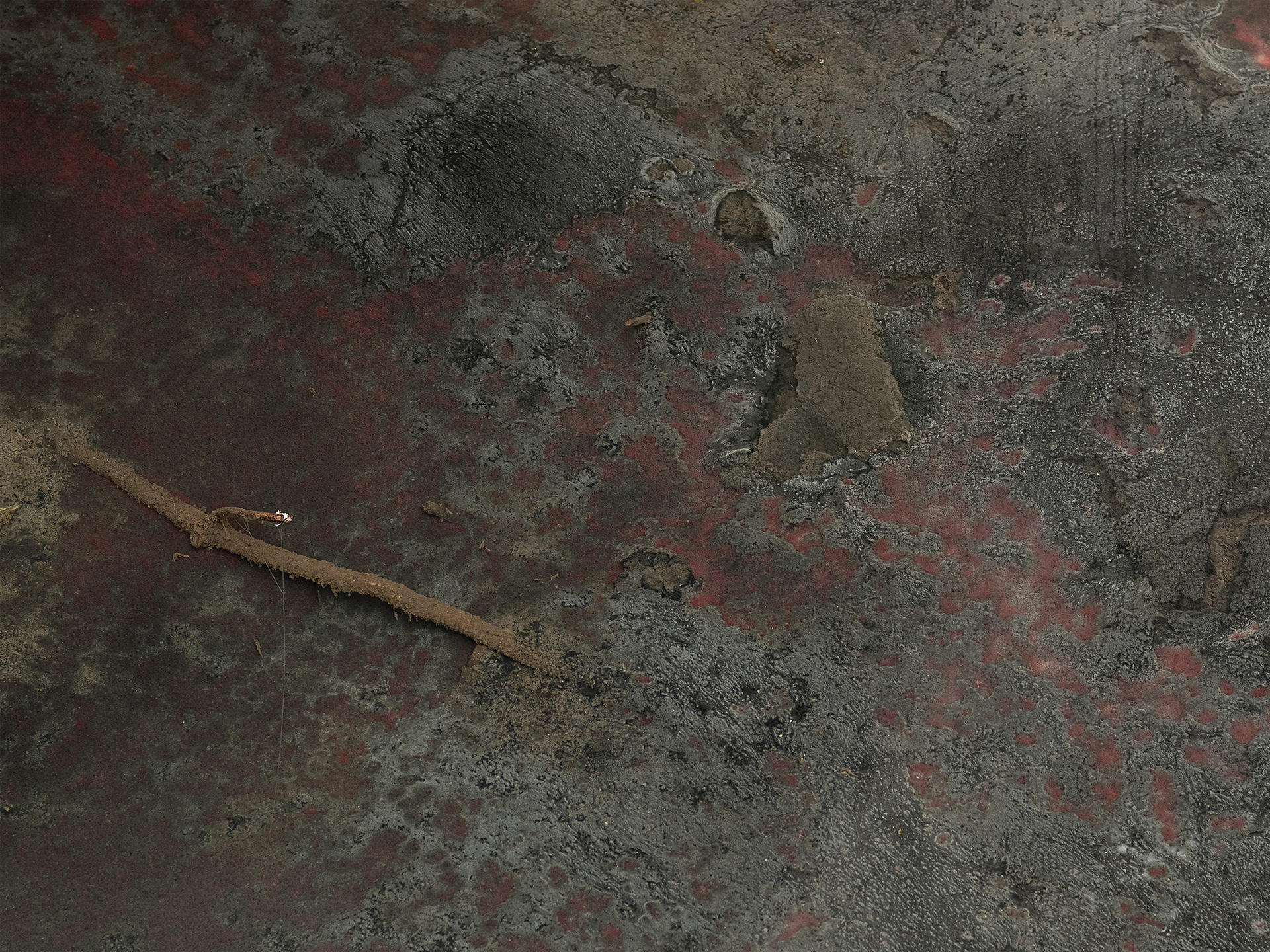
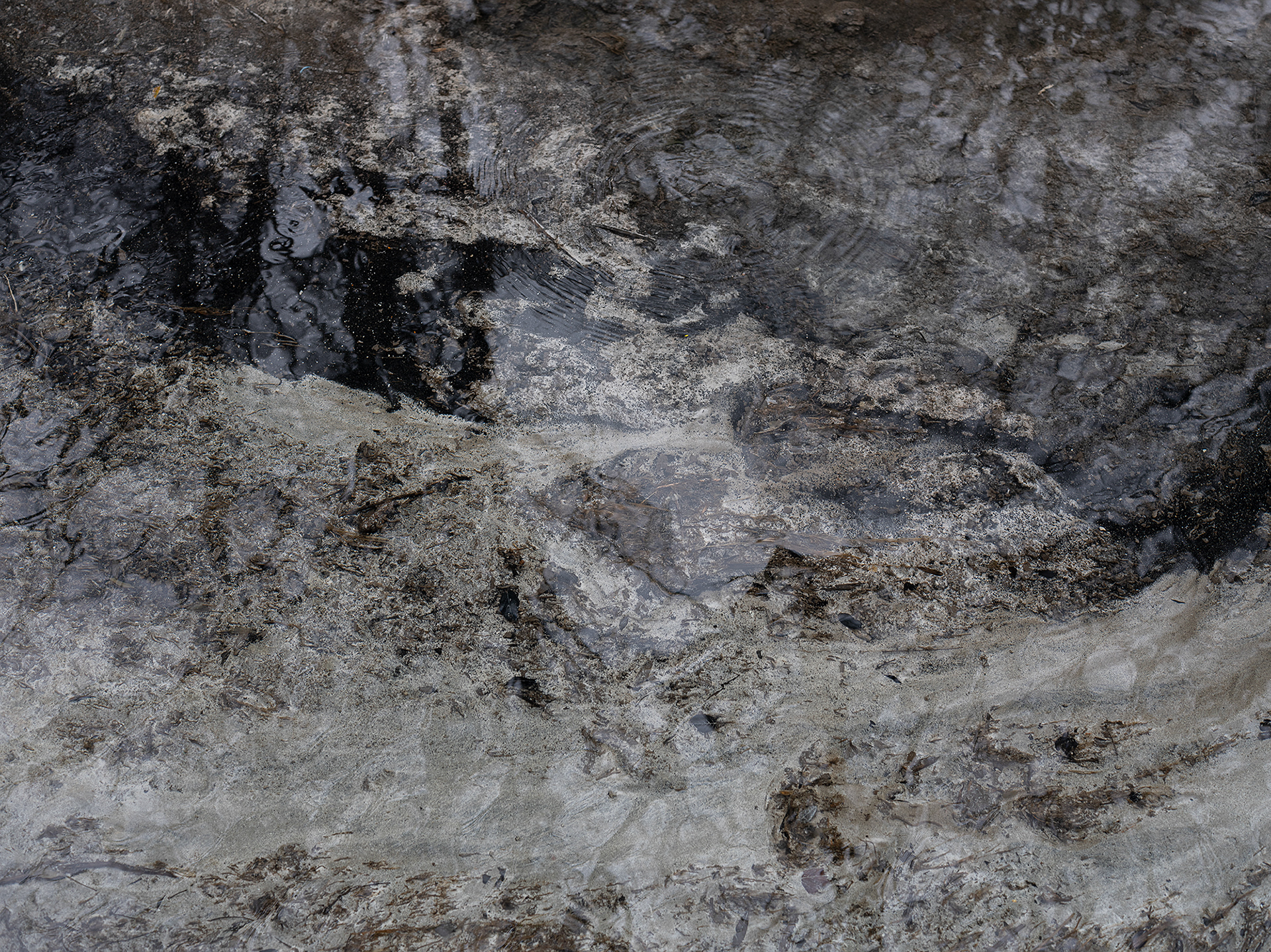
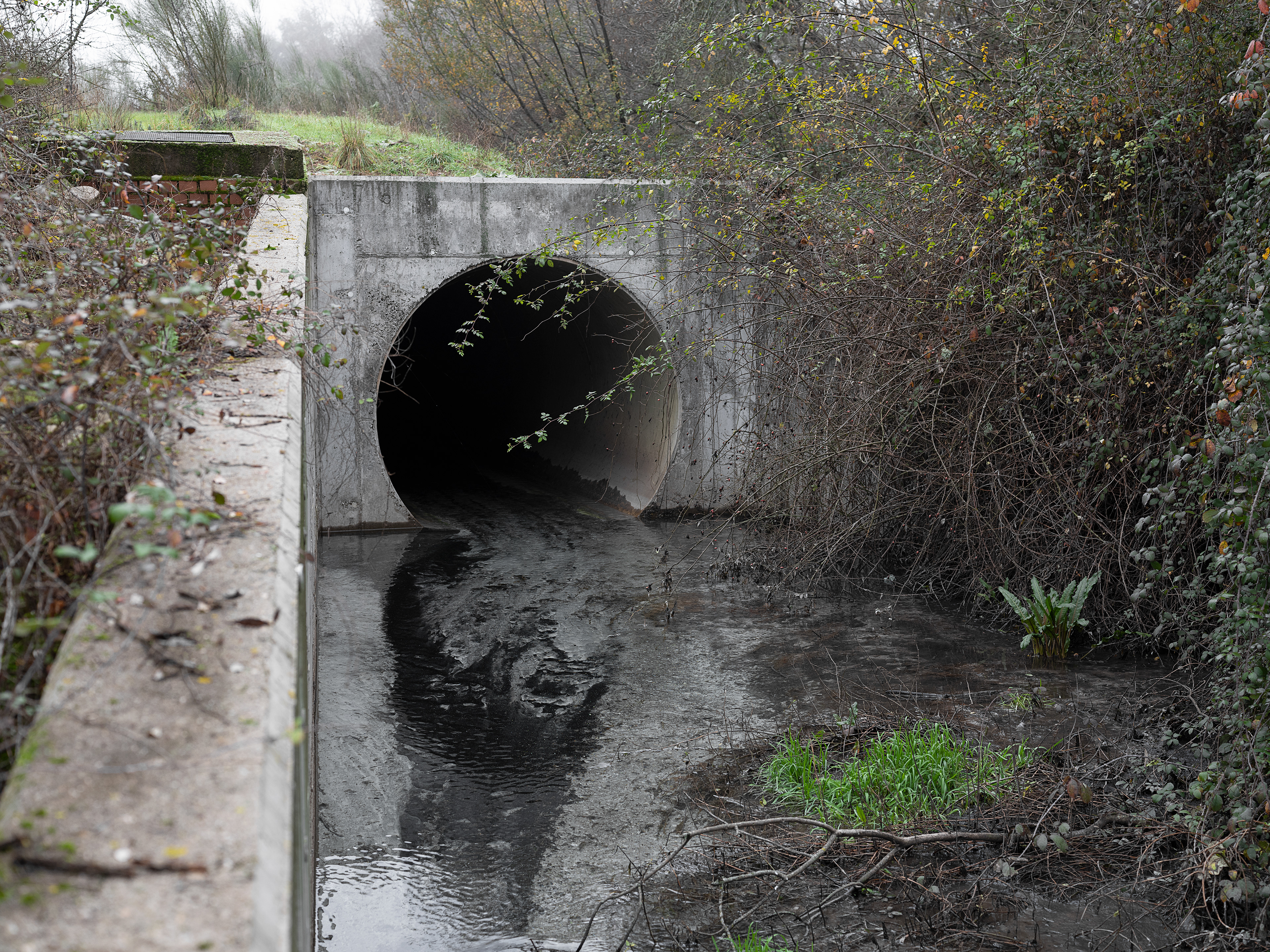
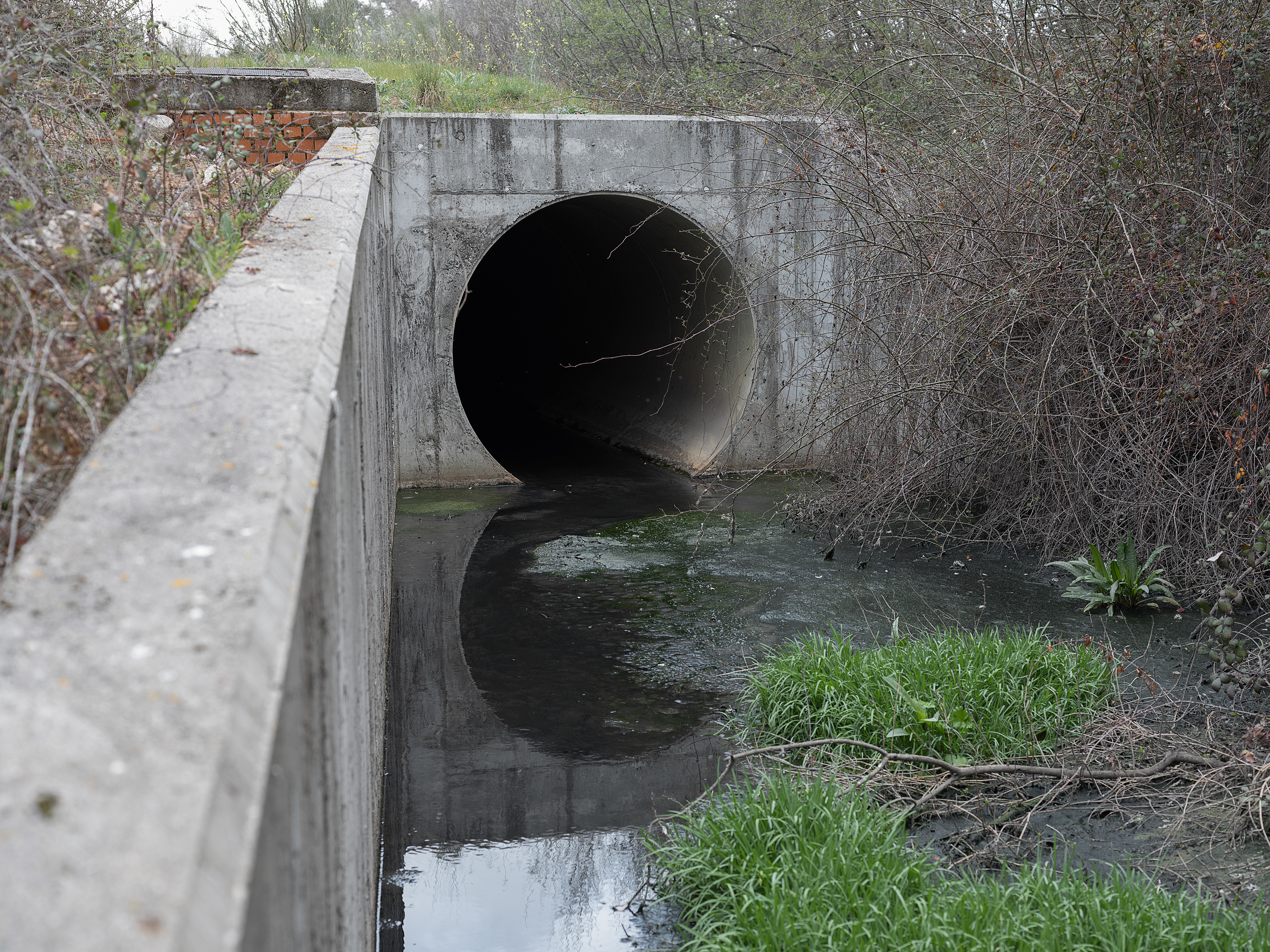
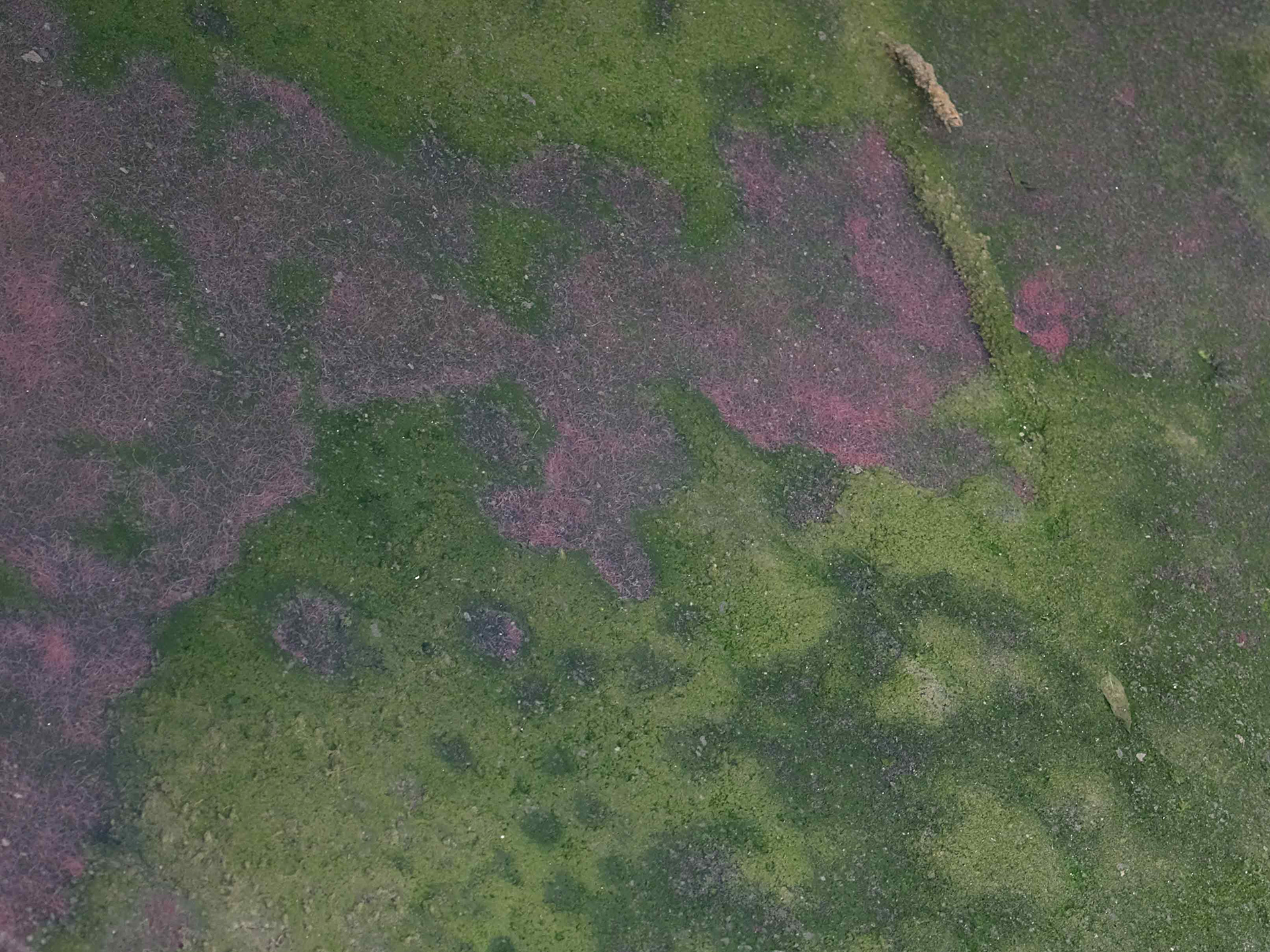
Siguiendo el cauce del río, 'Fósiles Mutantes' investiga los procesos de transformación y degradación del color como consecuencia de alteraciones medioambientales y reacciones químicas vinculadas al territorio. El proyecto observa cómo el lodo, al mezclarse con un vertido de metales pesados, genera cromatismos inestables que mutan y se transforman dentro del ecosistema acuático del río Aulencia.
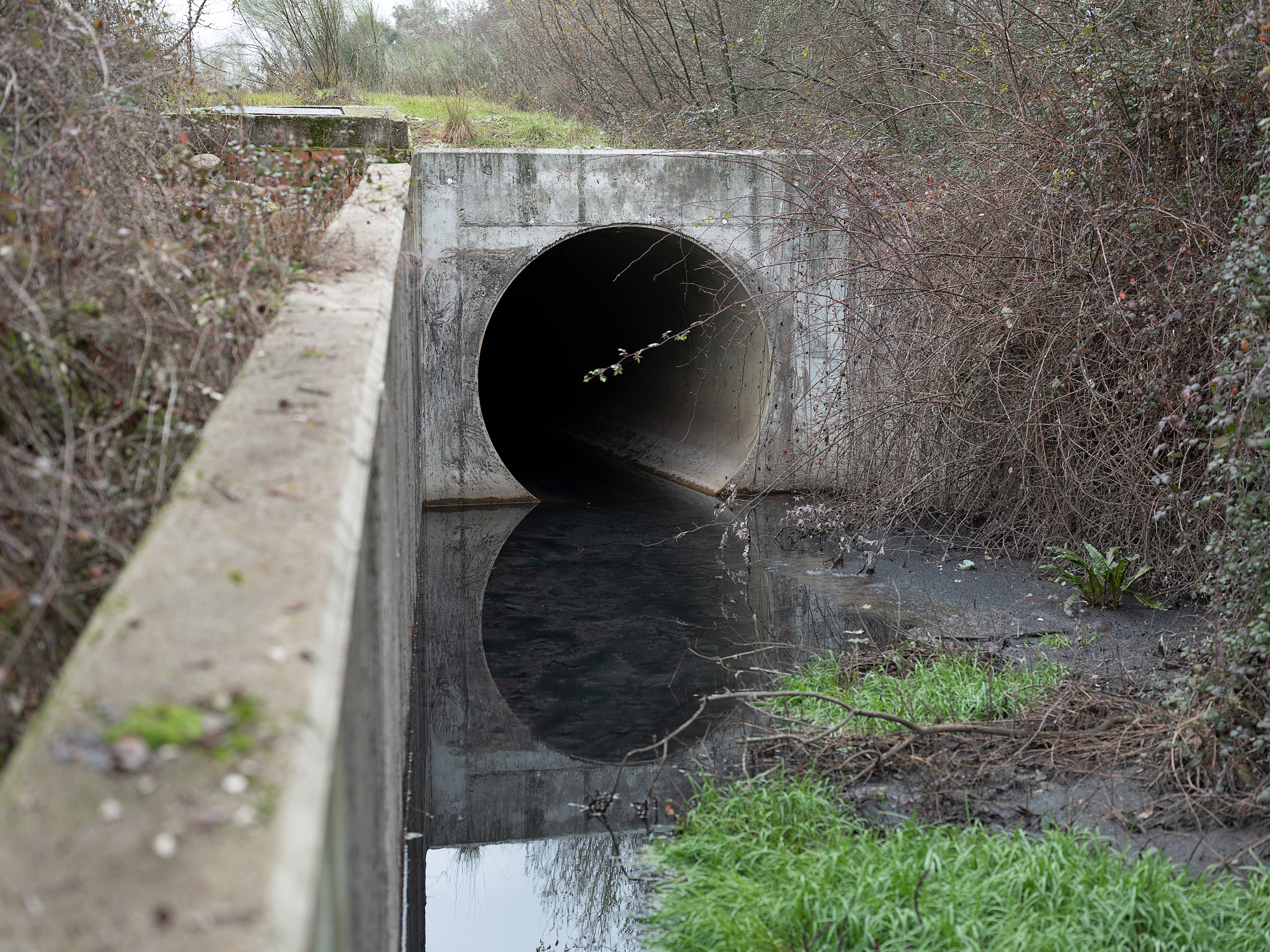
A partir de la forma circular de la tubería de vertido, así como de las tonalidades y texturas que adquiere la materia en el agua, se trazan tres formas correspondientes a tres instantes distintos del mismo lugar, registrados en días diferentes. Las esculturas funcionan así como una captura material —en paralelo a las tomas fotográficas del vertido en tres momentos concretos— que fosiliza el instante en el que estas formas y colores se manifiestan. En ellas, la materia orgánica en mutación, junto con los metales pesados presentes, queda petrificada y reconvertida en fósiles del paisaje contemporáneo.
<
[ENG]
Mutant Fossils (2025)
Following the course of the river, ‘Mutant Fossils’ explores the processes of colour transformation and degradation resulting from environmental changes and chemical reactions linked to the local area. The project observes how sludge, when mixed with a discharge of heavy metals, generates unstable colour patterns that mutate and transform within the aquatic ecosystem of the Aulencia river.
Based on the circular shape of the drain pipe, as well as the hues and textures the material acquires in the water, three shapes are created corresponding to three different moments at the same location, recorded on different days. The sculptures thus function as a material capture—parallel to the photographic shots of the spill at three specific moments—which fossilises the instant in which these forms and colours manifest themselves. In them, the mutating organic matter, together with the heavy metals present, is petrified and transformed into fossils of the contemporary landscape.
Bario (Ba), Cadmio (Cd), Cromo (Cr), Cobre (Cu), Hierro (Fe), Manganeso (Mn), Níquel (Ni), Plomo (Pb), Vanadio (V), Zinc (Zn), Mercurio (Hg), Bismuto (Bi), Aluminio (Al), Arsénico (As).
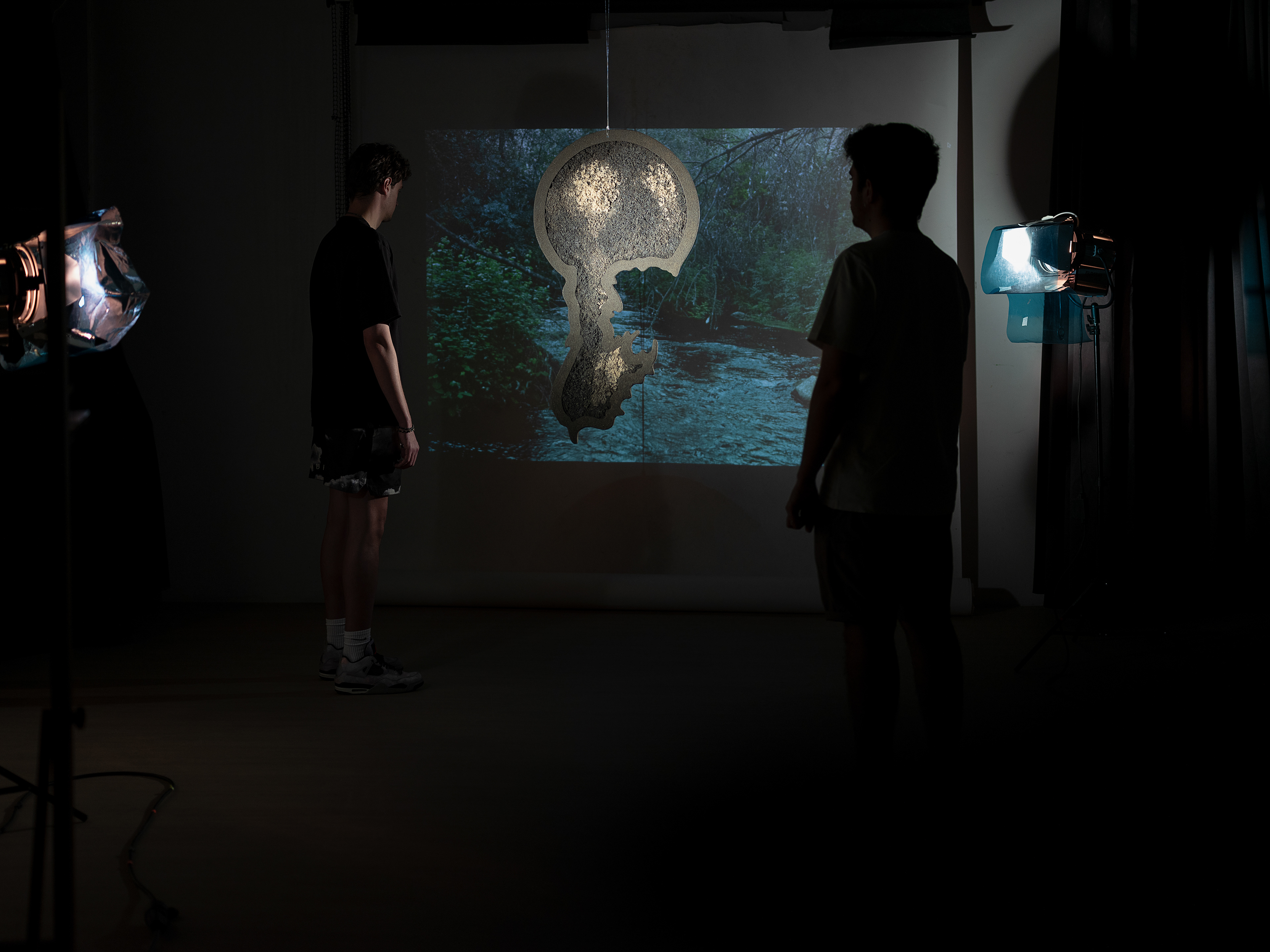
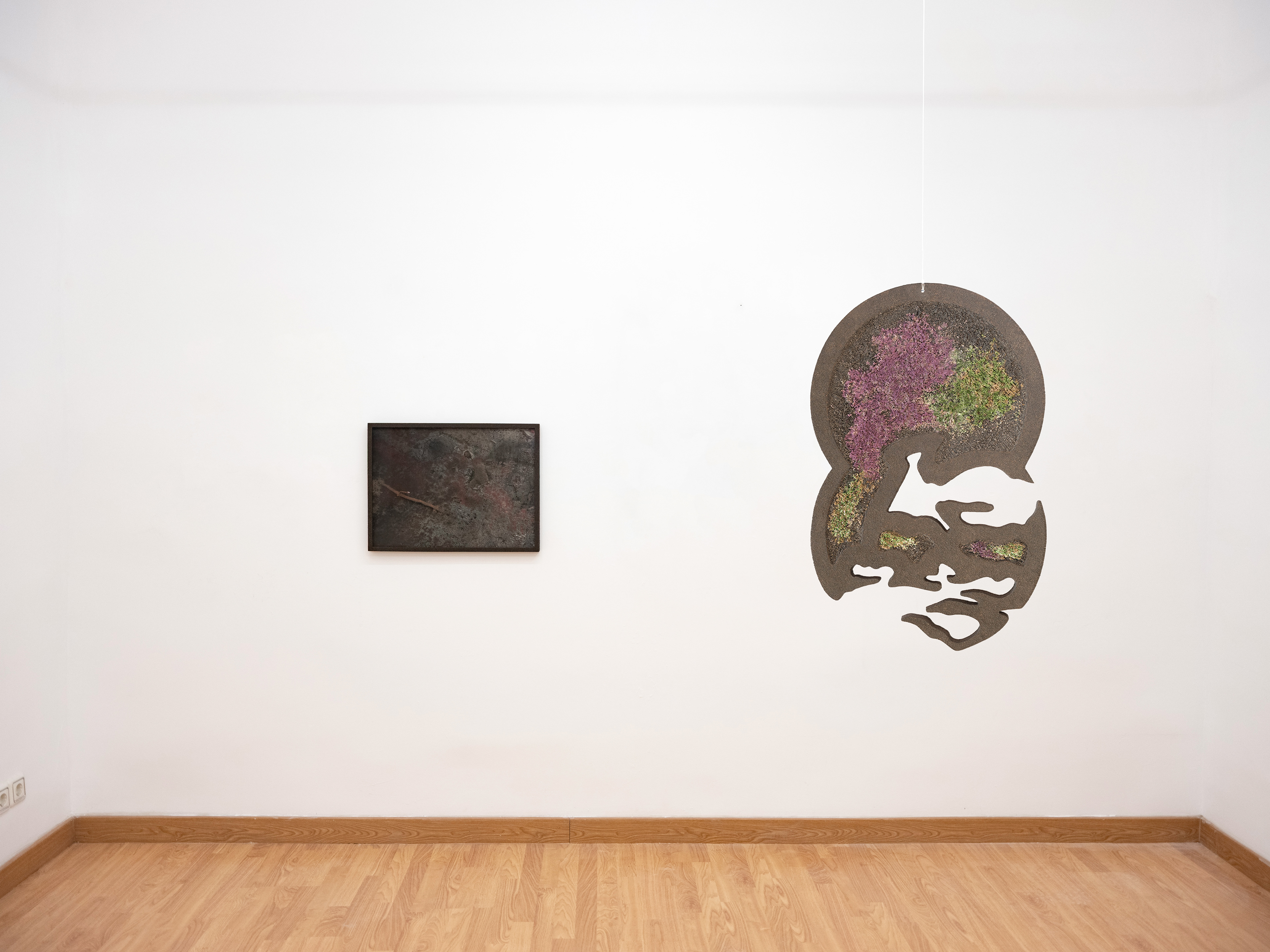
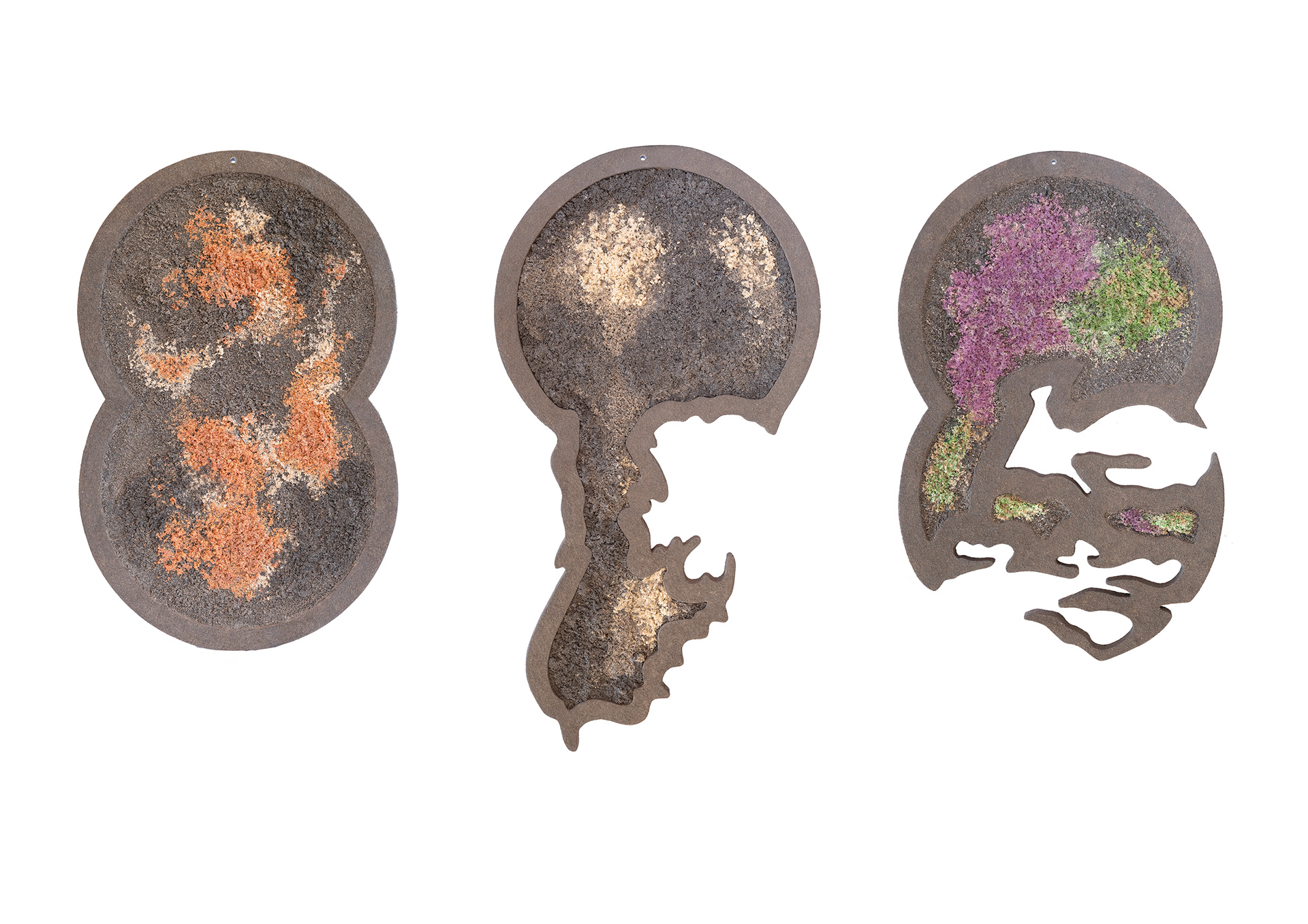
Fósil Mutante 1/3
57x89x4,5cm
Técnica mixta
57x89x4,5cm
Técnica mixta
Fósil Mutante 2/3 Fósil Mutante 3/3
57x102x4,5cm 57x89x4,5cm
Técnica mixta Técnica mixta
57x102x4,5cm 57x89x4,5cm
Técnica mixta Técnica mixta